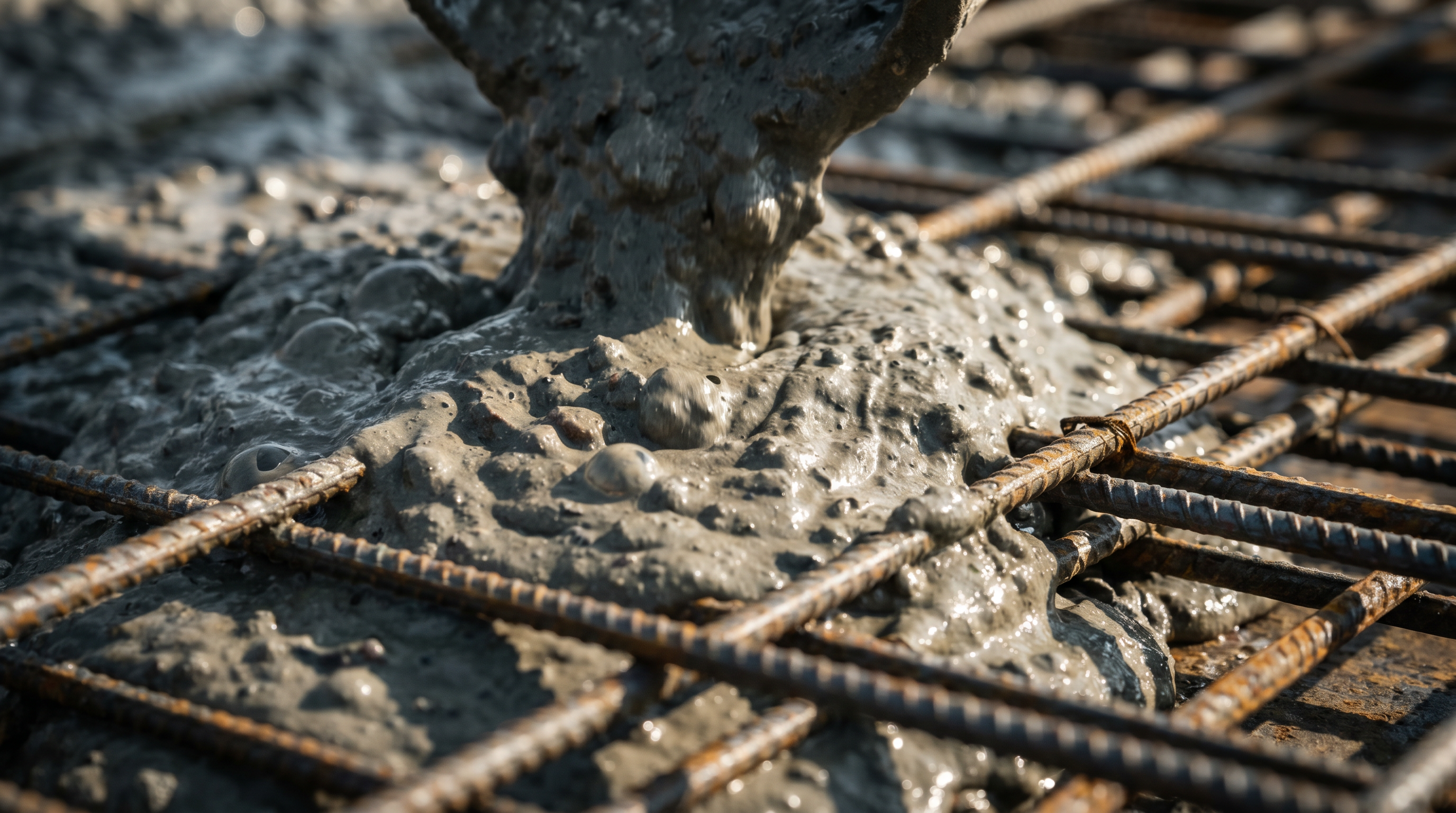
Self-compacting concrete: benefits, uses and technical characteristics
Self-compacting concrete (SCC) is a high-fluidity mix that flows and fills complex formwork without mechanical vibration, while staying cohesive and uniform — quieter sites and improved surface finish.
Typical composition
Cement and aggregates (fine and coarse) with strict dosing.
Superplasticisers for mobility without uncontrolled extra water.
Filler or supplementary fines for paste stability.
Water strictly controlled (water/cement ratio).
On-site behaviour
High flow — filling congested reinforcement zones.
Self-compaction — less reliance on pokers and lower risk of poorly compacted areas.
Surface with lower apparent porosity when batched and cured correctly.
Durability potential from reduced voids and segregation risk.
Benefits
Faster placement in certain geometries.
Better working environment (less vibration noise).
Demanding finishes on fair-faced elements.
Improved dimensional and surface quality when the process is disciplined.
Common uses
Columns, walls and slabs with dense reinforcement.
Precast architectural units with visible finish.
Civil engineering works where flow through tight formwork is critical.
Control testing (reference)
Slump flow — flow spread and segregation sensitivity.
V-funnel — flow rate and cohesion.
L-box — ability to pass under reinforcement bars.
Testing programmes should follow the relevant standard and the supplier/site control plan.
Sustainability
Lower reliance on vibrators, potential for more efficient mix designs and longer structural life can improve lifecycle performance — always case-specific.
Good practice
Respect transport and pumping time windows.
Tight, robust formwork to withstand hydrostatic pressure from fluid paste.
Curing (moisture, temperature, protection from sun/wind).
Informational article. Mix design, testing and acceptance depend on standards, specification and supervision.